Executive Summary
An entrepreneur approached us with a bold idea: build a dedicated platform for relay running leagues, something that had never existed before. The opportunity was real, but so was the risk. Without proof of demand, committing to full product development could mean spending significant time and money building something nobody wanted.
Instead of diving straight into code, we recommended a validate-first approach: a realistic prototype site paired with a targeted waitlist campaign. The goal was to confirm real demand and gather direct user feedback before any major investment.
The outcome:
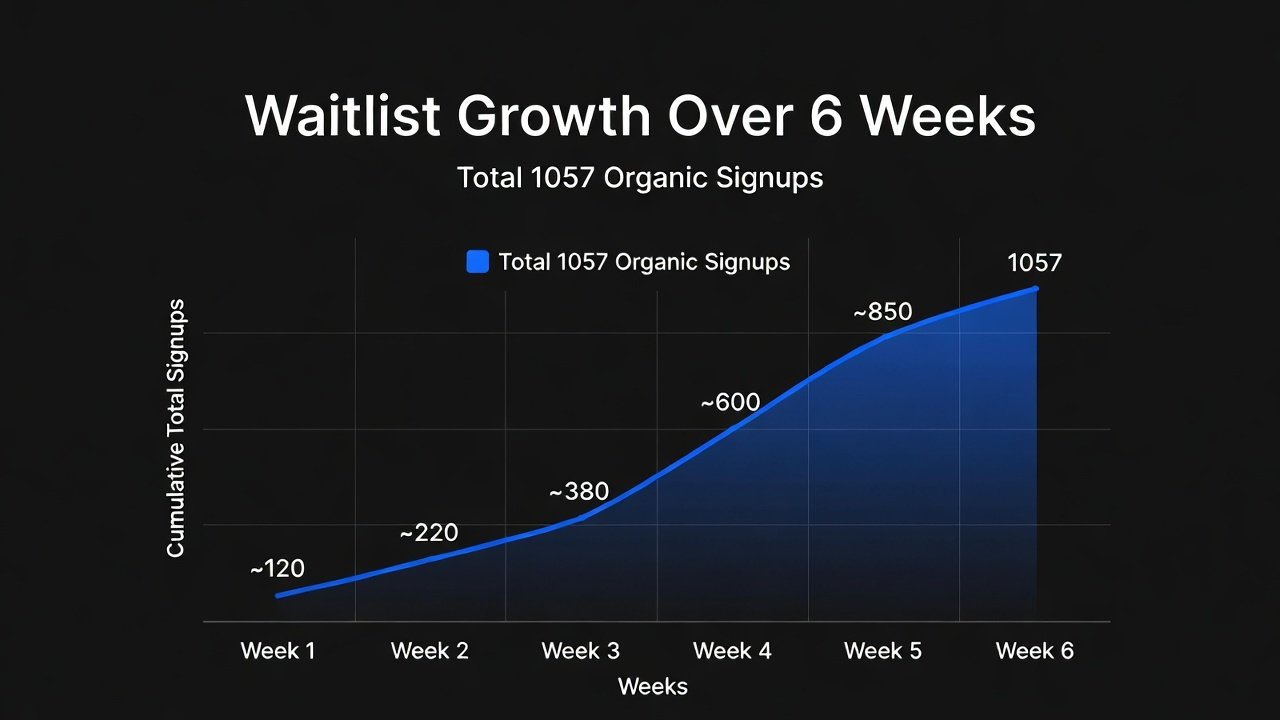
In just six weeks, over 1,000 people signed up organically. Nearly half submitted detailed feedback, giving us a clear roadmap, and the confidence to move into full development.
Starting with a validation campaign made all the difference. We got real feedback from potential users, so we weren't guessing about what people wanted. The feedback shaped our roadmap, every decision was informed by what we heard from our early audience.

Jason Lynch
Founder, Infinite Running League
Client Background & the Problem
Our client is an avid runner and experienced community organizer who had spent years watching relay race management struggle with the same fragmented toolset: spreadsheets, email threads, and group chats cobbled together to coordinate teams, rosters, and event sign-ups.
The Market Gap
Most running event platforms are built for individual sign-ups, marathons, 5Ks, triathlons. None were designed for the team-based, collaborative nature of relay leagues. For managers, there was no way to create teams, manage rosters, or communicate with runners on a single platform. For runners, there was nowhere to build a profile, join a team, or connect with fellow relay enthusiasts.
The Core Challenge
Relay league fans were accustomed to fragmented, basic tools, and it was unclear whether they'd adopt something new. Launching a full product without proof of interest was a costly gamble. The client wanted to move fast; our advice was to move smart.
Strategy: Validate Before You Build
Design the Vision: Prototype Website
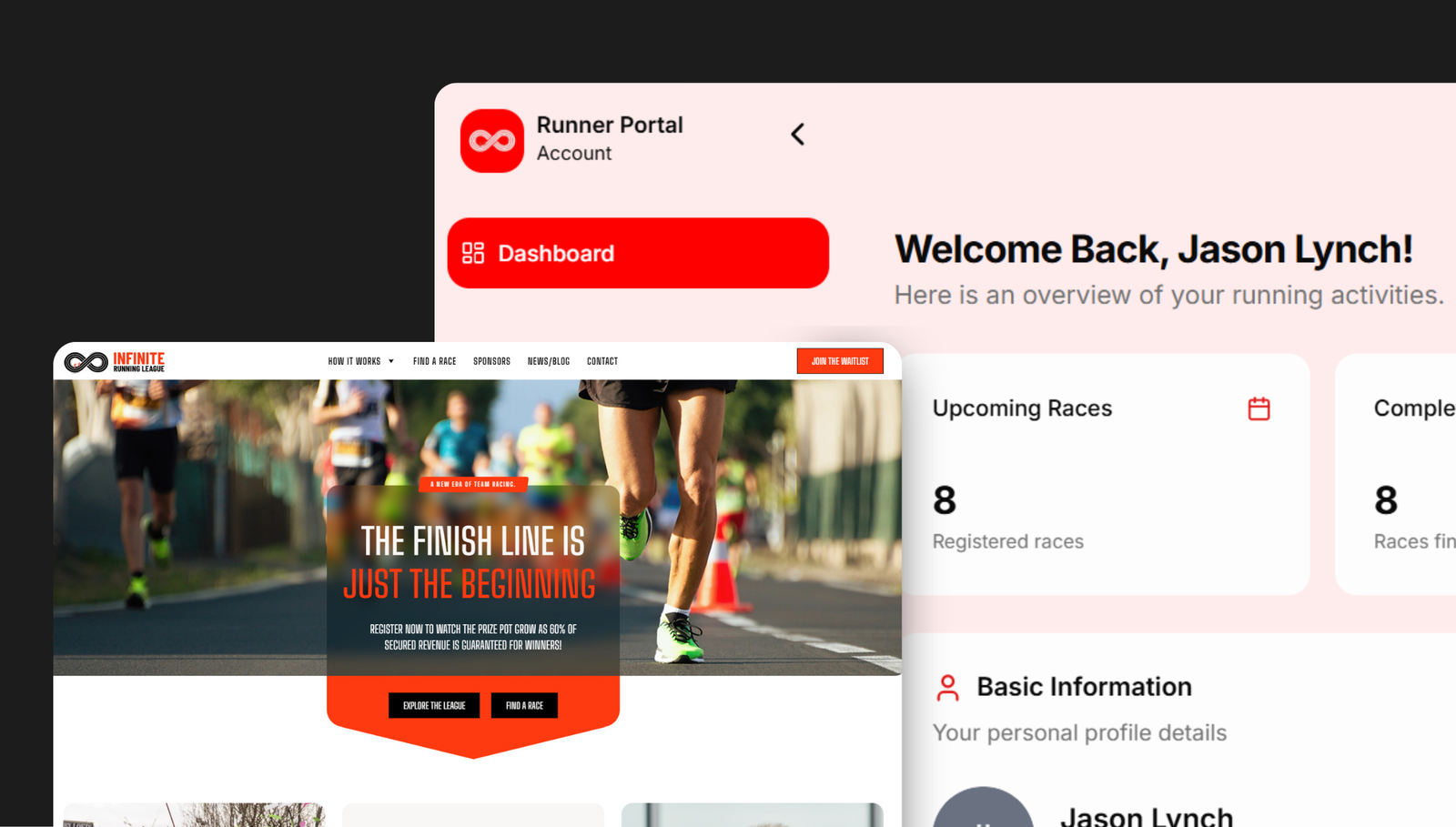
We built a realistic, server-side rendered prototype site that simulated real user flows for both managers and runners. Managers could see how team creation, roster management, and runner invites would work. Runners could explore profile setup, race registration, and communication tools. The lean setup allowed for rapid iteration and strong security from day one.
Launch the Waitlist Campaign
A simple "Join the Waitlist" prompt sat at the heart of the prototype. Promoted across social media, running forums, and targeted ads, the campaign reached relay fans and team managers where they already gathered. Real-time analytics tracked which pages and messages resonated, allowing us to refine messaging continuously throughout the campaign.
Gather & Act on Feedback
Every person who joined the waitlist received a short optional survey asking what wasn't working with current tools, which features mattered most, and what would make them switch to a new platform. Responses were stored securely and reviewed in real time, allowing the team to identify patterns and adjust the feature roadmap accordingly.
Key Insight
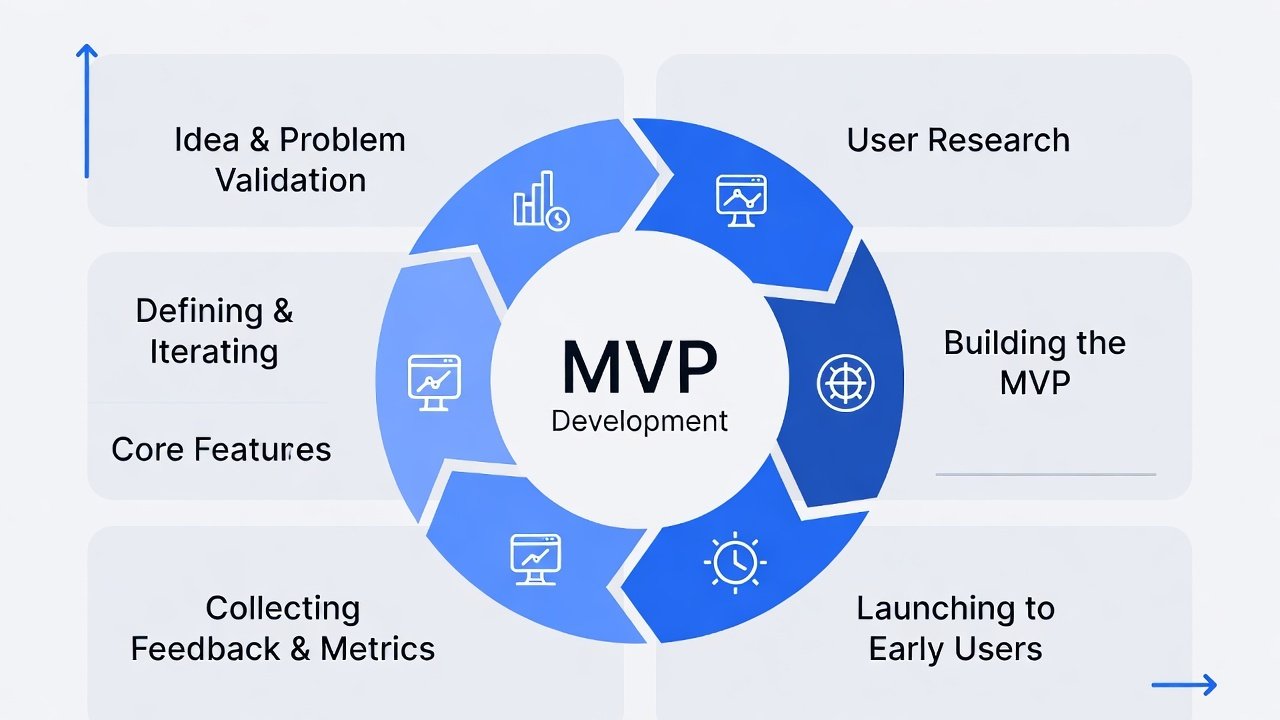
User feedback directly influenced the final feature set. Communication and messaging tools, not originally a primary focus, were elevated in the roadmap after users identified them as just as important as core team management features.
What We Proved in Six Weeks
The validation campaign exceeded every expectation and produced concrete, data-backed proof of demand, not assumptions.
1,000+ Waitlist Sign-ups
Organic sign-ups in just six weeks, confirming a clear, ready audience for the platform.
45% Feedback Rate
Nearly half of all sign-ups submitted detailed survey responses, an exceptionally high engagement signal.
1 Key Insight Discovered
Feedback revealed that "simplified communication" was as critical as "team management", reshaping the product roadmap.
Technical Architecture
The platform was built for reliability, rapid iteration, and long-term scalability, enabling a fast launch while remaining easy to update as user feedback came in.
Frontend: React + Next.js
Server-side rendering was implemented to ensure fast load times and strong search engine visibility.
Backend & APIs: RESTful Services
A modular architecture was designed to support seamless third-party integrations and future feature expansion.
Database: PostgreSQL
Optimized relational data modeling supports complex relationships between runners, teams, and event structures.
Infrastructure: AWS Cloud Deployment
Auto-scaling, high availability, secure authentication layers, and global content delivery were configured for reliability.
Why Validate First?
This project is a clear demonstration of what happens when you prioritize learning over launching. By investing a fraction of the typical development budget into validation upfront, the team entered full-scale development with:
A validated business case, backed by real sign-ups, not guesswork. A shaped roadmap, driven by what users actually said they needed. An engaged early audience, over 1,000 potential first users ready for launch day. Reduced risk, avoiding the costly mistake of building the wrong product.